
Description
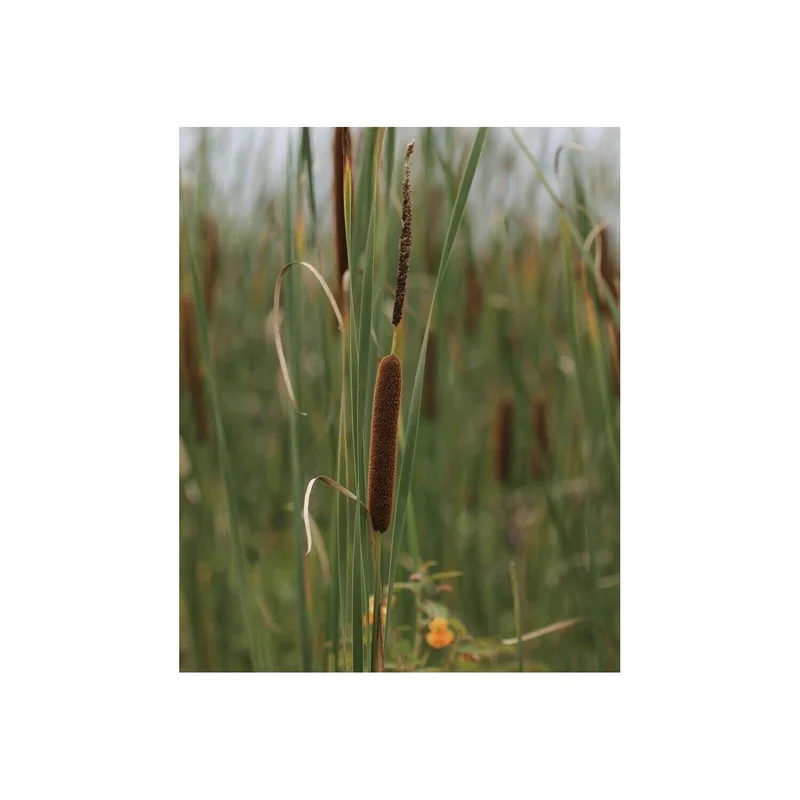
Cattails can be found in marshes and wetlands on almost every continent. Indeed, cattails are a familiar sight along creeks, riverbanks When broadleaf cattail seeds collected from across the United States were grown in a common garden, plants from seed collected in northern populations flowered earlier than plants from seed from southern populations
The scientific name of broadleaf cattail is Typha latifolia L. (Typhaceae)
When broadleaf cattail seeds collected from across the United States were grown in a common garden, plants from seed collected in northern populations flowered earlier than plants from seed from southern populations
Cattails are a very important food for wildlife and are supposedly quite edible and tasty for humans, too (Euell Gibbons devotes a whole chapter to Cattails in his book, “Stalking the Wild Asparagus.”). Cattails require moist soil, such as the edge of a pond, or can be grown in shallow water up to about 6″ in depth. They are easy to grow in any climate if given sufficient water, though they can become invasive if not contained.
Zone 3+




Reviews
There are no reviews yet.